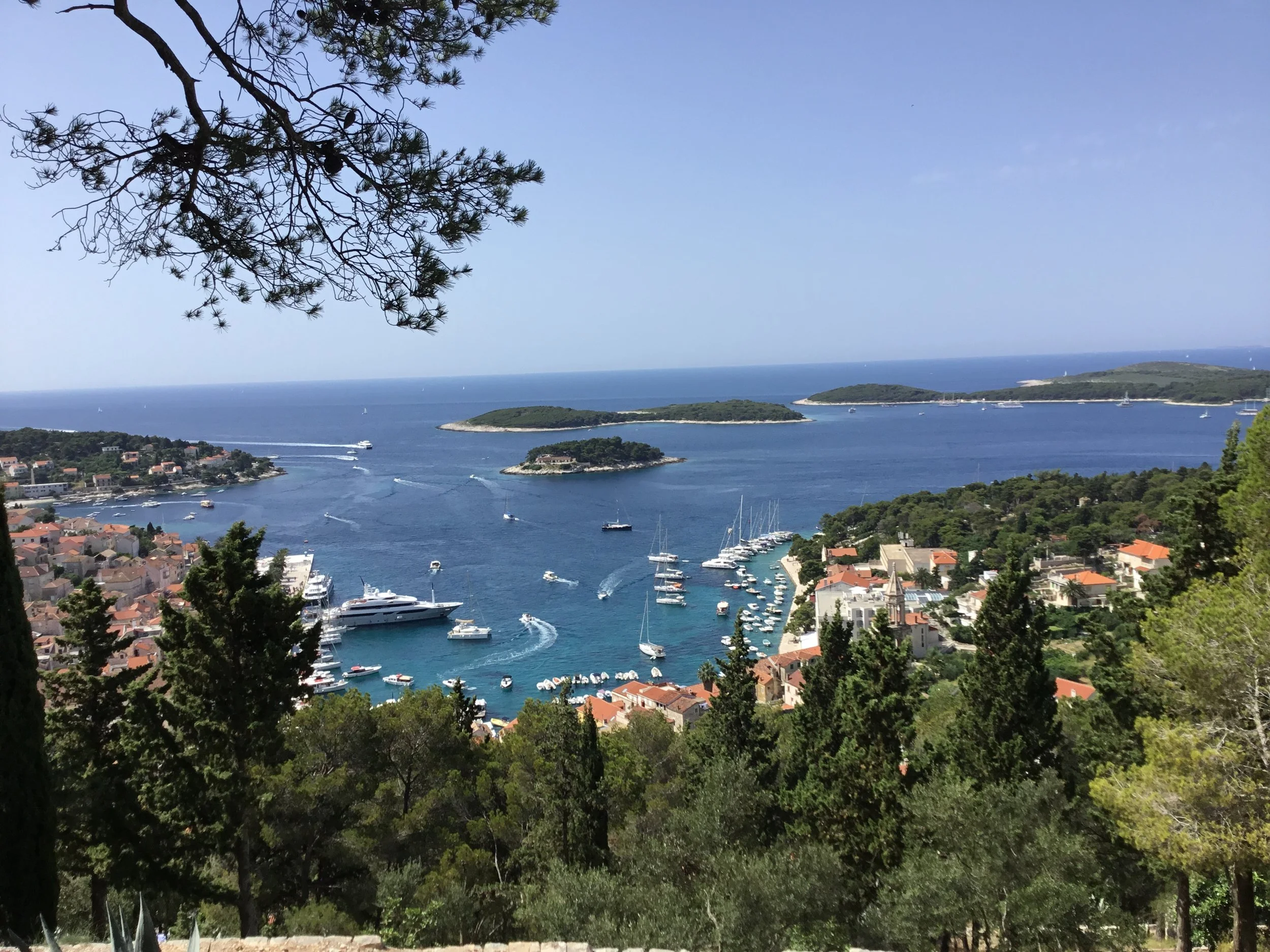
hvar
Located off the coast of Dalmatia, Hvar is one of the most famous islands on the Adriatic coast, known for its sunny climate, historic towns, lavender fields and vibrant nightlife, it combines ancient history, Mediterranean landscapes and a lively cultural life.
Hvar lies in the eastern part of the Adriatic Sea, just off the coast of Croatia. It is part of the Dalmatian Islands archipelago. The island is about 68 km long, making it one of the longest Croatian islands. It sits between the islands of Brač, Vis, and Korčula. Ferries connect it mainly to the mainland city of Split. Hvar is also famous for having one of the highest numbers of sun hours in Europe, often over 2,700 hours per year.
Hvar has a long history shaped by different Mediterranean civilisations. The island was first settled by prehistoric communities. Around 384 BC, Greek settlers from Paros founded the colony of Pharos in today’s Stari Grad. The surrounding agricultural land, known as the Stari Grad Plain, still preserves the original Greek field layout and is a UNESCO site. The island later became part of the Roman Empire. In the Middle Ages it was ruled by various powers, including the Republic of Venice, which left a strong architectural and cultural influence. After Venice, Hvar came under Austrian and later Yugoslav rule before becoming part of modern Croatia in 1991.
The island has several important towns: Hvar – the main tourist center, known for nightlife and historic architecture. Stari Grad – one of the oldest towns in Europe, founded by Greeks. Jelsa – a quieter coastal town surrounded by vineyards and pine forests.
Some of the most notable attractions include: Hvar Fortress: A hilltop fortress overlooking Hvar Town with spectacular views of the harbour and nearby islands. St. Stephen’s Square: One of the largest squares in Dalmatia, surrounded by historic buildings and cafes. St. Stephen’s Cathedral: A Renaissance cathedral located at the centre of Hvar Town. Pakleni Islands: A chain of small islands just offshore, famous for beaches, swimming, and sailing. Stari Grad Plain: An ancient agricultural landscape laid out by the Greeks over 2,400 years ago.
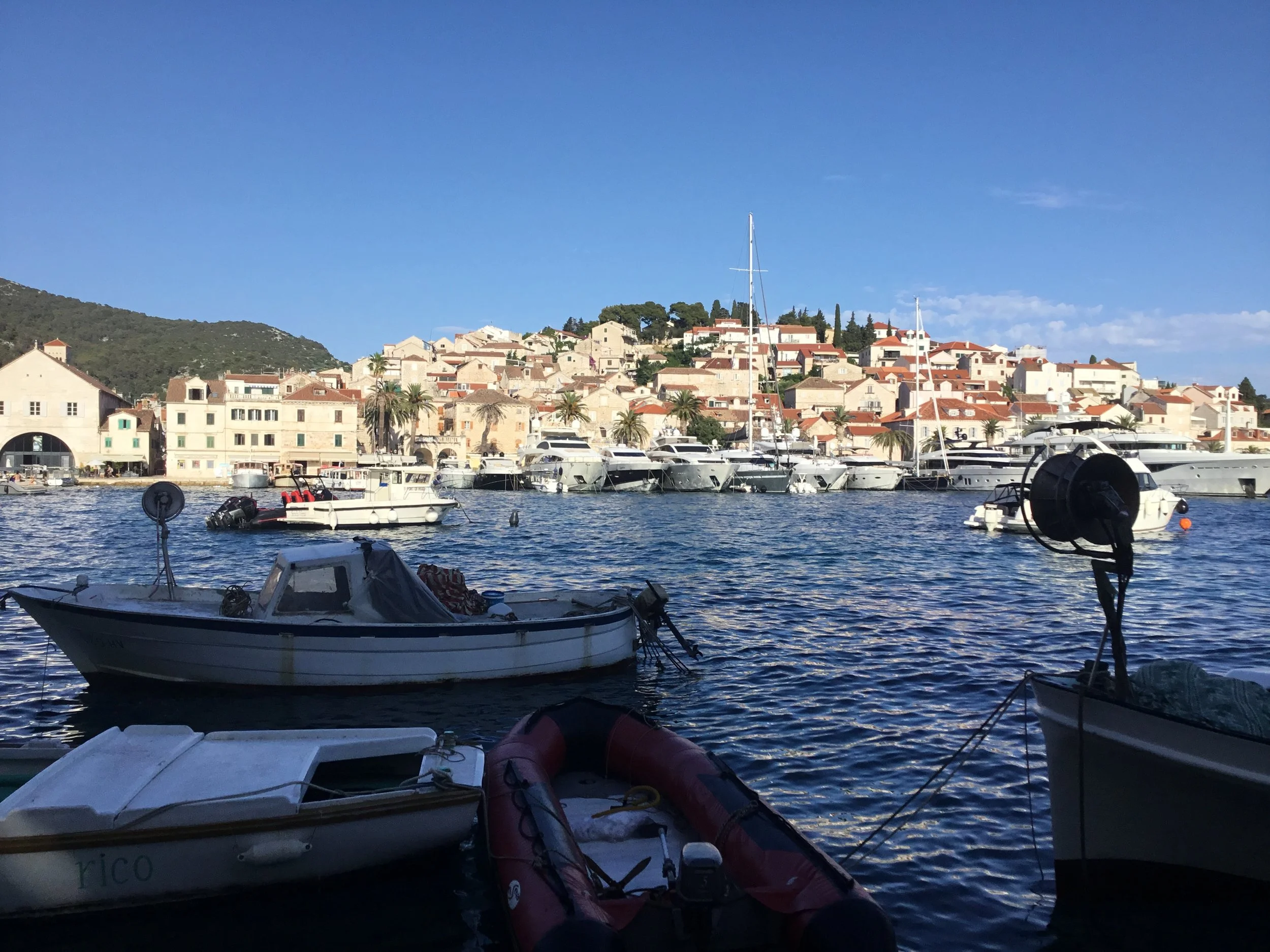
There are two main ferry options from the mainland, departing from either Split or Dubrovnic. Split to Hvar Town (foot passengers), or Split to Stari Grad (cars and passengers) is best booked through Jadrolinija. Fast catamarans take about 1 hour and are the best option if you’re staying in Hvar Town; they also service a number of stops along the way. Seats can sell out in summer, so booking ahead is recommended. The car ferry to Stari Grad takes about 2 hours. Stari Grad is around 20 minutes by car or bus from Hvar Town. From Dubrovnic use Kapetan Luka, they have a daily passenger ferry departing at 3.30pm, arriving at 6.50pm.
We caught the ferry from Vis at 10.10am, arriving at 10.50am, nice and quick.
Our hotel the Pharos Hvar Bayhill Hotel was a quick 10 minute walk around the harbour. There are taxis available nearby, close to the bus station, across St Stephen’s Square.
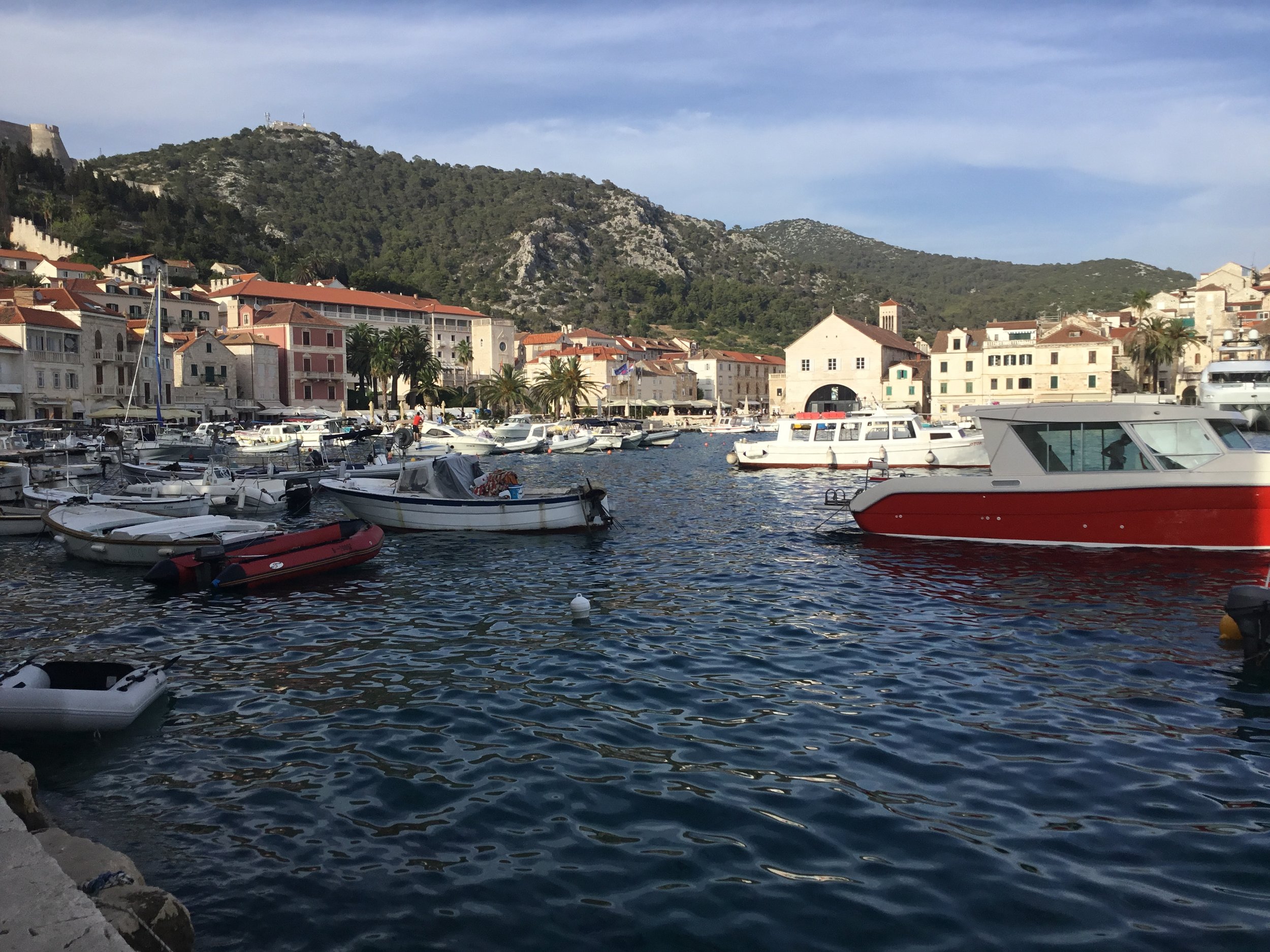
After an early check in, swim and breakfast, it was time to explore historic Hvar town. We took in the aforementioned St. Stephen’s Square and Cathedral, the Arsenal (the Theatre which is part of the Arsenal), the Loggia, Paladini Palace, the clock tower, the Benectine Monastery, the Church of the Holy Spirit, the Franciscan Monastery, and finally the City Fort, which towers over Hvar, giving wonderful views of both the town of Hvar, but also of the nearby Pakleni Islands. Check out Hvar Heritage as a great guide to Hvar town.
The next day was an epic day of first visiting the monastery of St Mary via the ferry at Mali most, then cycling to Polace via Govedari and then back to Pomena.
First stop the ferry from Mali most to St Mary islet. Departing on the hour every hour and costing around 4 euros for the 25 minute trip. We were able to take our bicycles onto the ferry, though I understand this isn’t always allowed. Check out this link for more information on not just the ferry but for useful information about Mljet in general. You are expected to purchase a ticket for entrance to the National Park for around 10 euros and then pay for the ferry to St Mary’s. When we were there the entrance fee wasn’t really enforced and we blindly entered the park and just cycled up to the ferry.
When you visit you will just have to find out the current situation, not really an issue, just a little confusing.
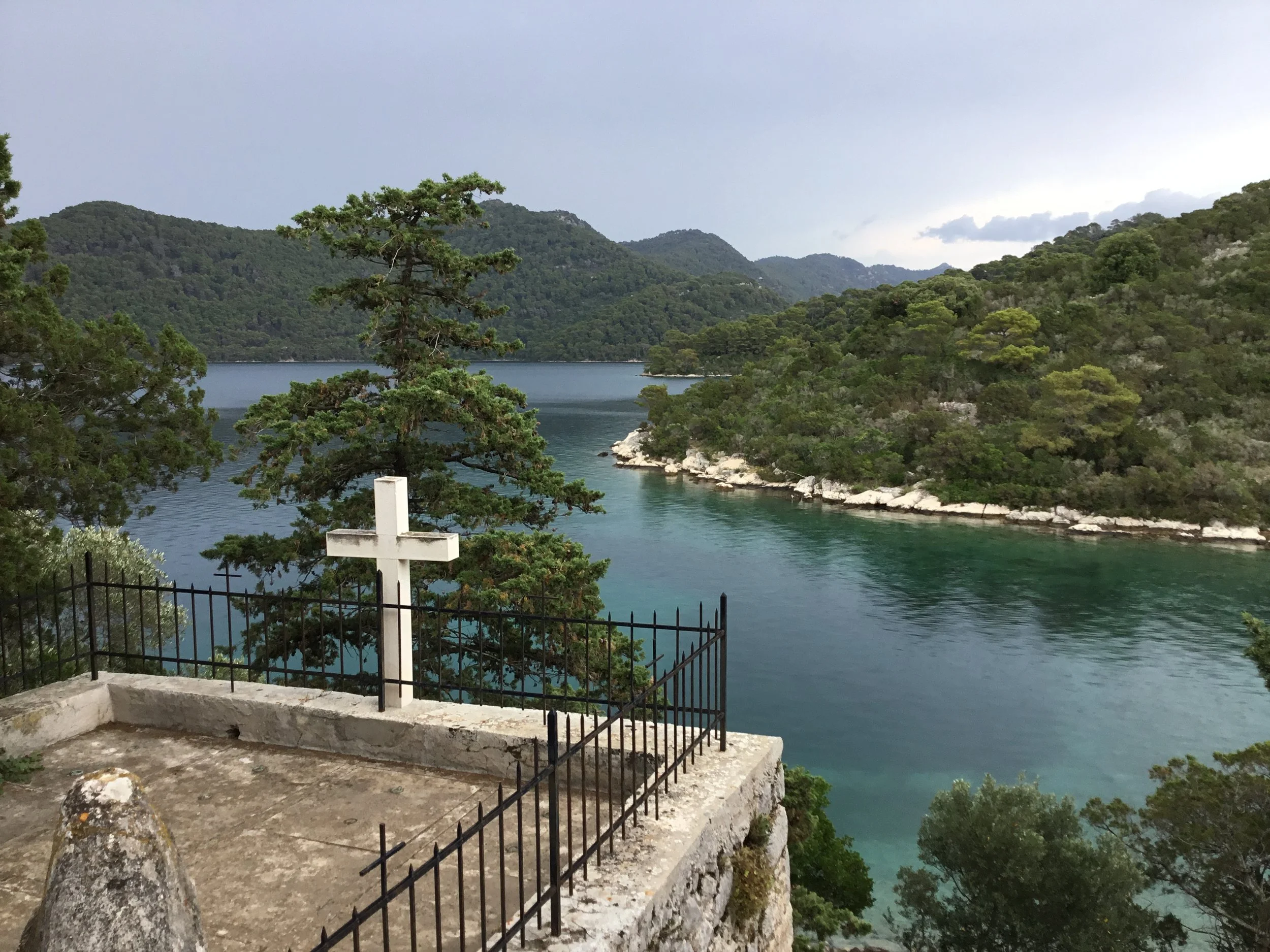
In any case, we had a nice couple of hours exploring the islet, including the Monastery, St Mary’s Church, St Benedict’s Chapel, the Cemetery, Roman Ruins and the Stables. There is also the restaurant Melita which is in a lovely position next to the lake.
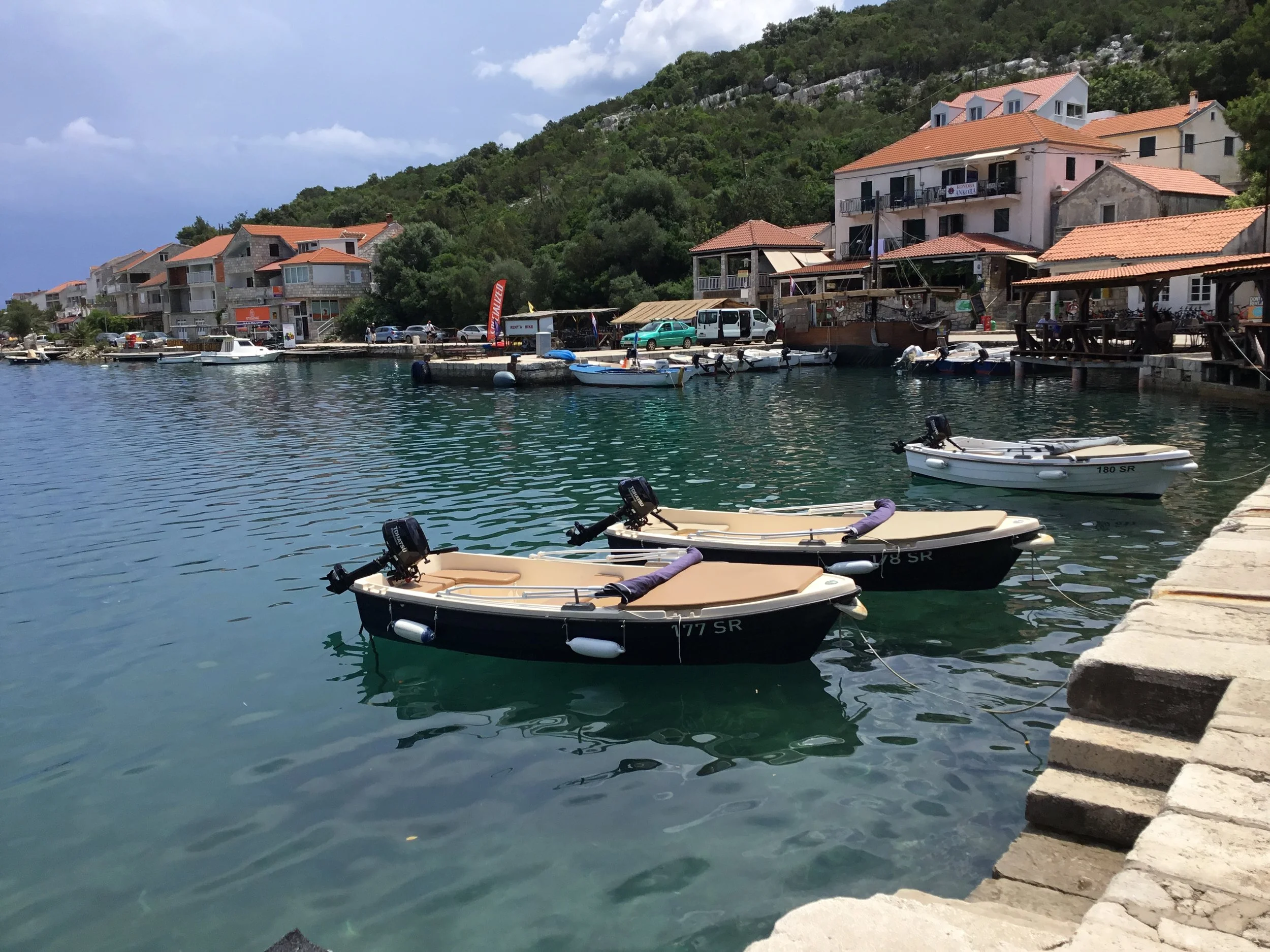
We then returned to Pristaniste ferry port and continued our cycle to Polace and it’s interesting Roman ruins, Rimska palaca. There are plenty of restaurants and apartments in Polace and is a nice alternative to Pomena.
Generally, most visitors spend their time in the western part of the island, but to really get away from it all you must head east. Around an hour away you will find Saplunara on the southeastern horn of the island. This is where you will find unspoilt beaches with a handful of apartments, a couple of restaurants and some pretty coves such as Plaza Lumuni and Velika Saplunara. To reach Saplunara from Pomena you must first take the Pomena to Sobra bus, and then take the Sobra to Saplunara bus. Problem is bus 18, Pomena to Sobra departs at 4.45am Monday to Saturday, 5.00am on Sunday, arriving in Sobra at 5.40am. Then you have to wait until 8.55pm for the Sobra to Saplunara bus 19!
As you can imagine, we gave it a miss. If you really want to go to Saplunara take a taxi and spend a few nights enjoying the seclusion. This link will help with getting around the island as well as accommodation suggestions.
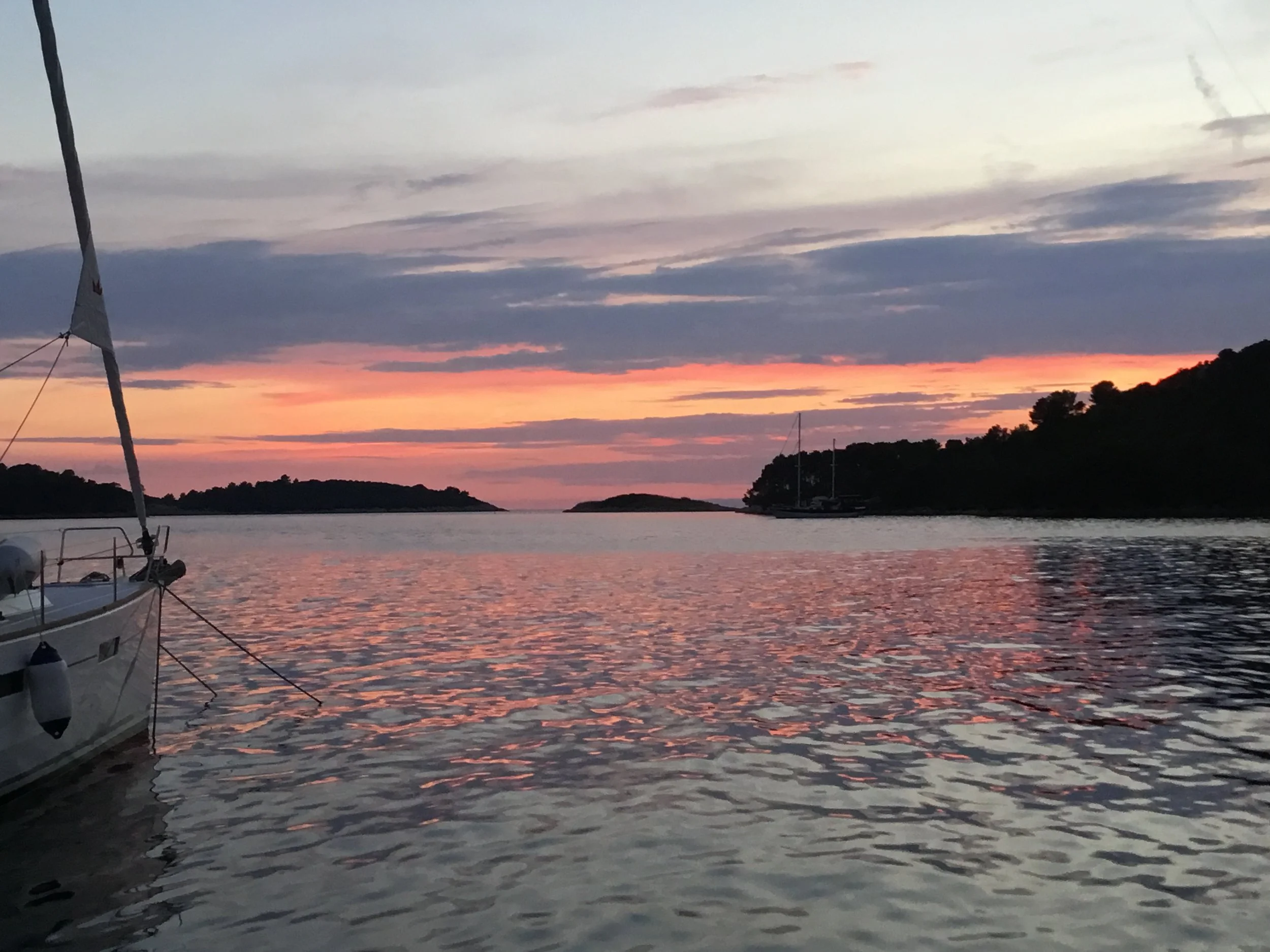
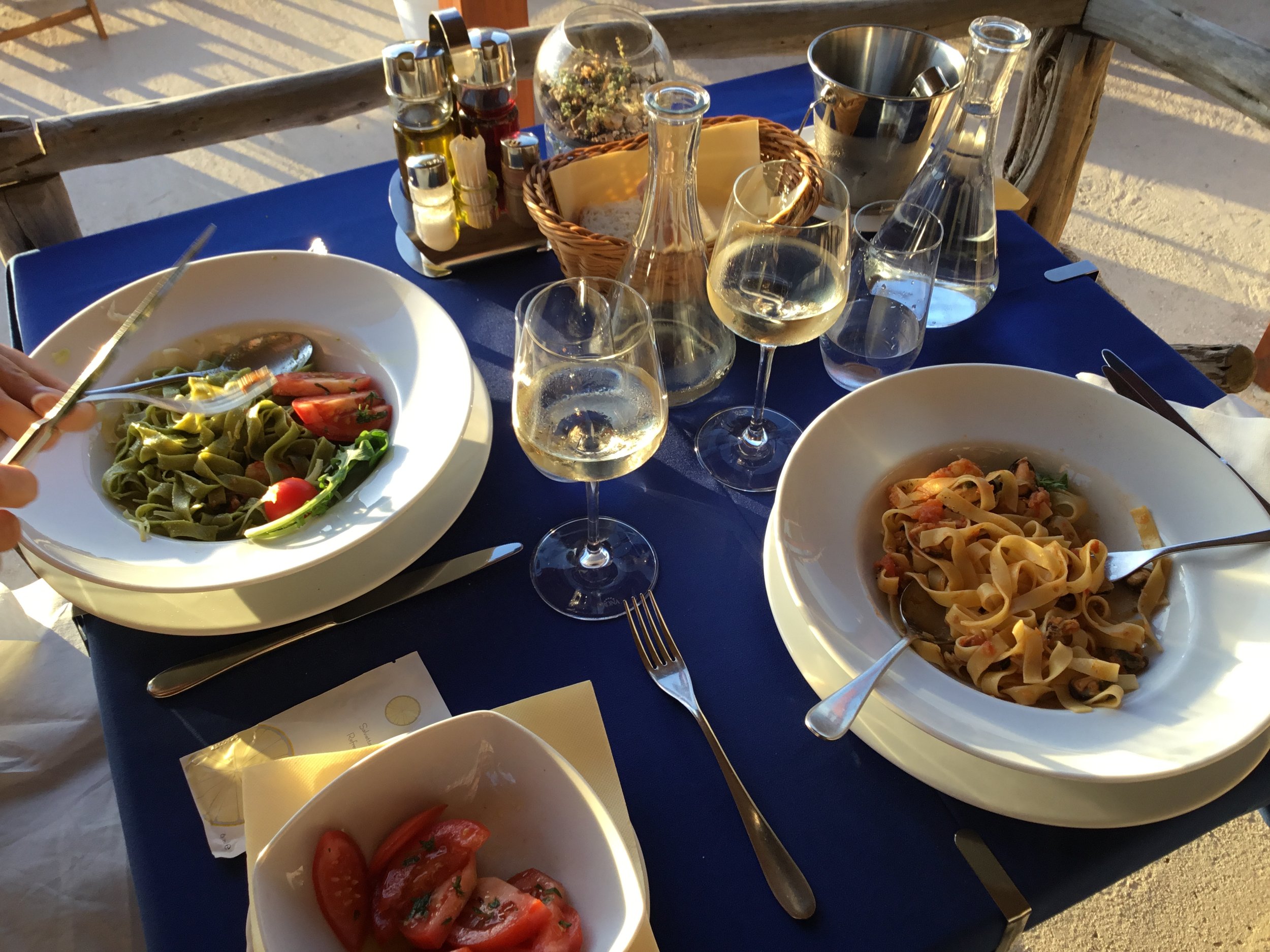
Back in Pomena you will find the Vista Mare Beach Bar which is part of the hotel where you can enjoy fantastic cocktails while enjoying spectacular sunsets, you can also swim safely here. A five minute walk in the opposite direction and you will find a handful of superb restaurants (Konoba), all with fantastic food and views to match. Specialities include seafood (of course), black risotto, deer and goat stews, goats cheese, high quality olive oil; both red and white is produced on Mljet with Hazdovac being the main winery on the island.
As for tours around the island I would recommend local operator Taxi Mljet. They offer a variety of tours including both boat and land options. Their wine tour is really enjoyable with a boat trip from Pomena to Kozarica and a visit to Hazdovac wine tavern which is part of the same winery mentioned above. The tavern also offers value for money accommodation. They also have a popular tour to Odysseus Cave where you get to swim through the sunlit cave, magic! GetYourGuide and Viator offer tours to the Blue Caves, island hopping, wine and food tours. Also Tripadvisor offer the same as above with the additional options of restaurant, hotel, flight, cruise and car-hire.
And finally, Lonely Planet for their excellent guidebooks.